


With integration to OpenAI on Azure via Microsoft Foundry, Tikit Virtual Agent can provide generative AI responses based on documentation you upload whether it be manually or from SharePoint. Generative responses use your uploaded documentation as a means to “learn” how to best provide a response. With generative responses, answers are unique and vary based on slight differences in how you prompt Tikit Virtual Agent.
Generative responses will be used when no configured Knowledge is found in your Knowledge Base. This ensure responses you’ve configured (KB or Templates) are returned first before a generative response is attempted to be returned.
OpenAI on Azure is deployed via Microsoft Foundry in your tenant, so your data stays with you. In addition, the model is capable of providing its own generative responses when no documentation is found. Responses are generative in nature and do not use the internet to provide responses.
This article will walk you through registration, deployment, and configuration. This integration makes use of three different Azure resources - Azure Foundry, Azure Search Service, and Azure Blob Storage.

Table of Contents:
One Click Deploy
Using the following button, you can deploy Tikit's Azure AI integration quickly. This deployment utilizes the lowest cost options for Foundry (Open AI), Search Service, and Storage.
These resources total approximately $80 per month. Pricing details are subject to change by Microsoft and should be validated after deployment. Tokens are not included in this estimate, more on these estimates can be found at the bottom of this article.
Resources can always be scaled up later if necessary
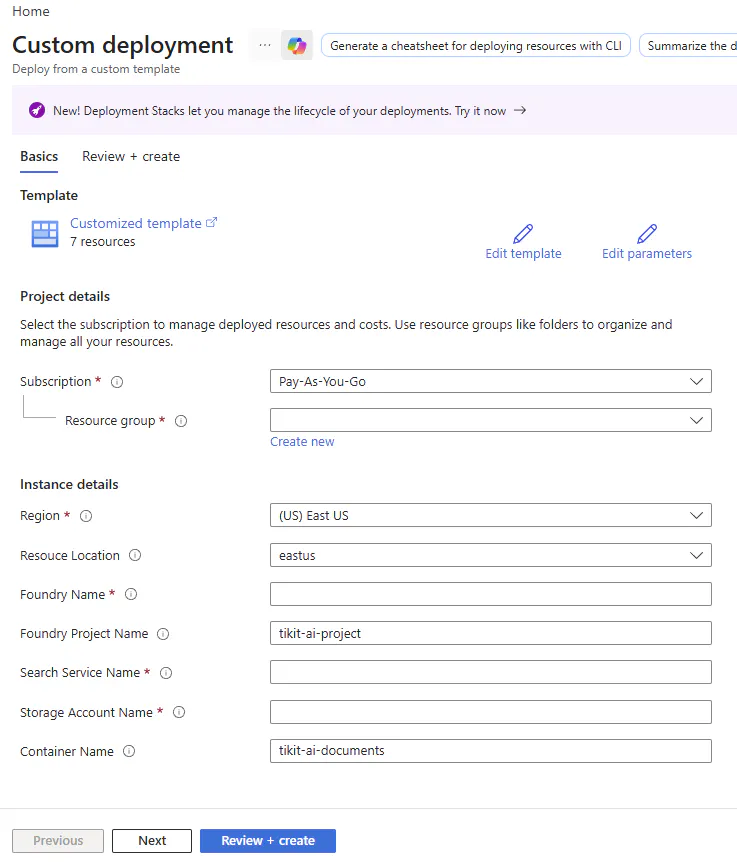
Choose your Subscription, and a Resource Group where these resources will be created. Your Resource Group will automatically determine the Region. Then choose the Resource Location, this is where Foundry (and the associated Foundry Project), Azure Search, and the Storage Account will be deployed to.
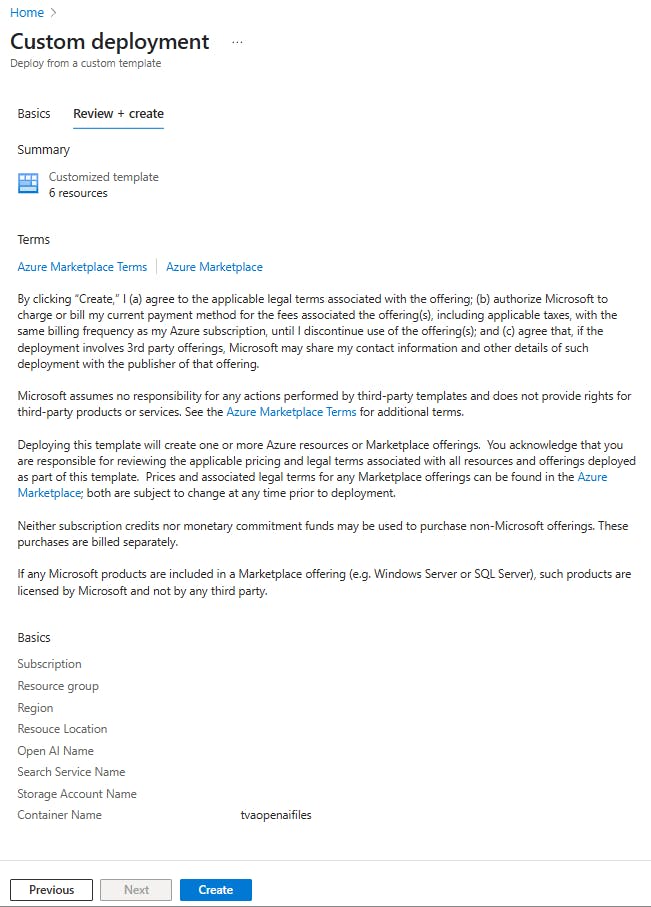
Once you've provided names for these resources, click on Review + Create and then finally Create. The deployment will begin and in couple of minutes it should be done.
Once it completes, head over to the Outputs tab.
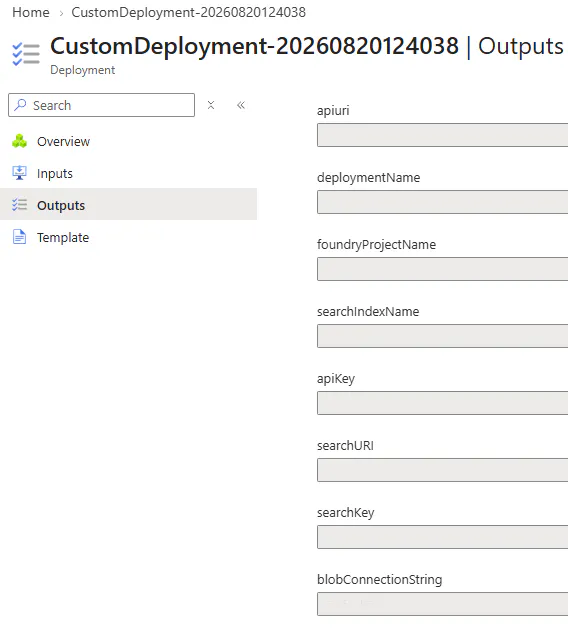
Here you'll be able to copy and paste the majority of values required into Tikit's Azure AI Settings page. The only setting that cannot be copied is the Index Name. It will retrieved after we've uploaded documentation.
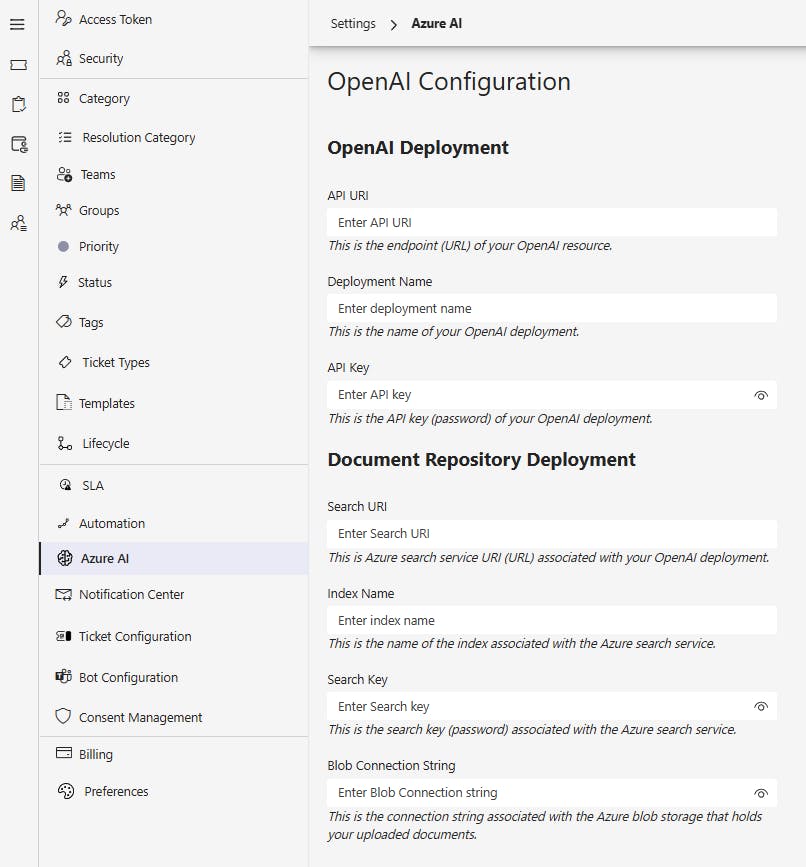
Keep the Outputs tab open. At this point, we're almost done with integration, next we'll train OpenAI around documentation that you upload.
Creating the Index and Uploading Documentation
At this point, resources are created and ready for documentation upload/training. Once complete, we'll retrieve the Index Name to set in Tikit AI settings so Tikit Virtual Agent can respond accordingly.
From the Outputs tab above, navigate back to Overview
Click on Go to Resource Group
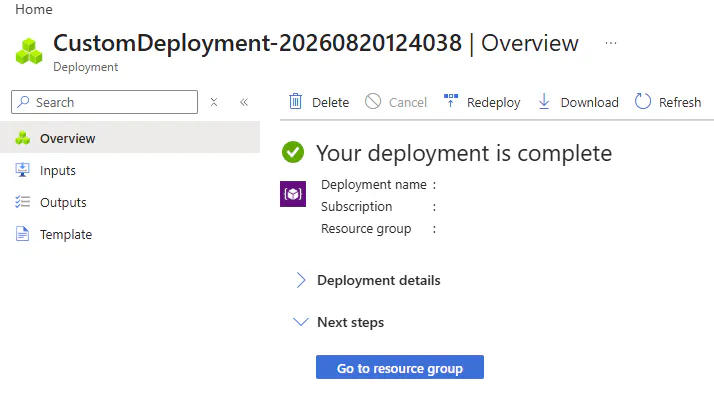
Here you'll see the resources that were created as part of the deployment. They will be named based on the values you set in the template you deployed.
Foundry
Foundry Project
Search service
Storage Account
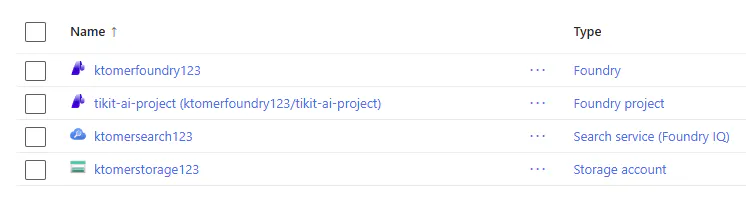
Click on your your Foundry Project's name
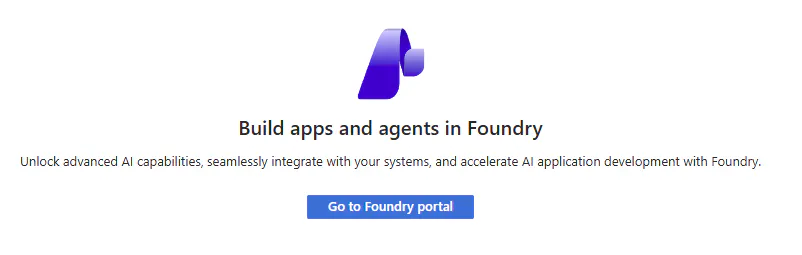
Click Go to Foundry portal. This will open a new tab to the foundry portal, keep the Azure Portal tab open as we'll come back to it after we're done in Foundry.
On the landing page, click on Test in playground
Then we'll navigate to Knowledge on the left hand menu
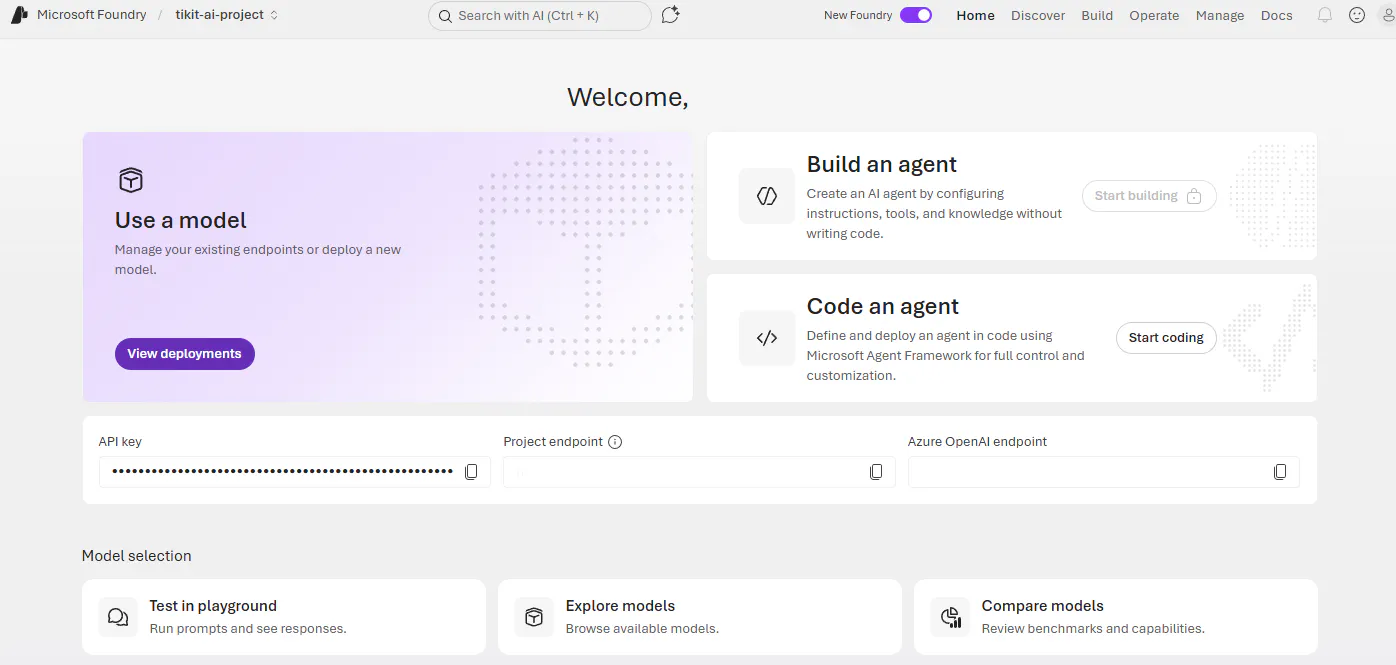
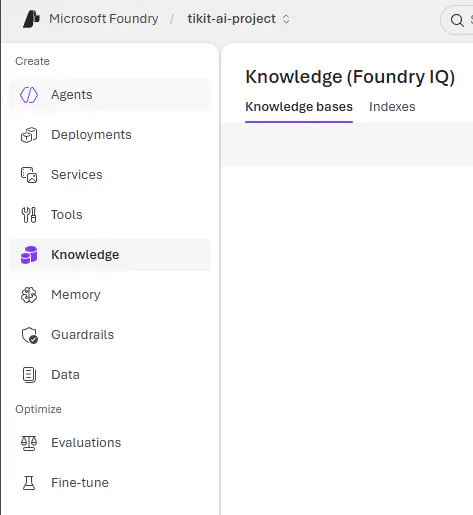
Here we'll connect to our storage, define how often it's retrained, and build the index.
Select the Foundry IQ resource you created with the deployment template, choose API Key for Auth Type, and then click connect
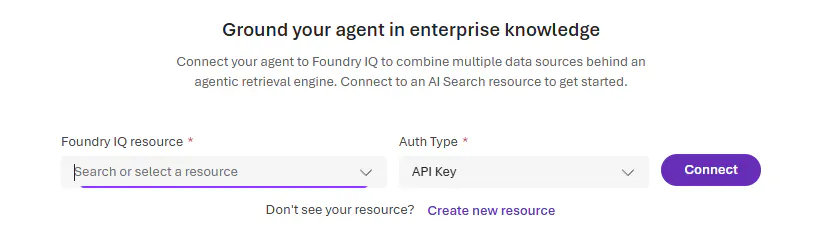
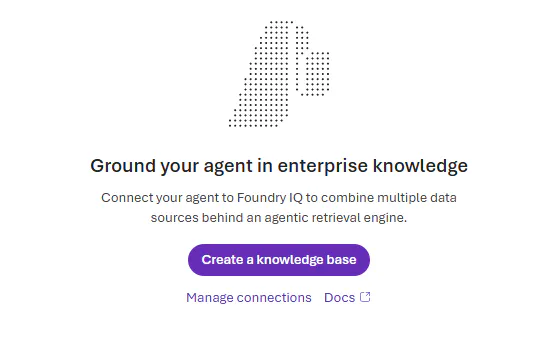
Click on Create a knowledge base
Choose a Chat completions model. Depending on the model deployed, this could be gpt5, gpt-5.6-mini, etc.. Leave everything else as defaults. Your Name may be different.
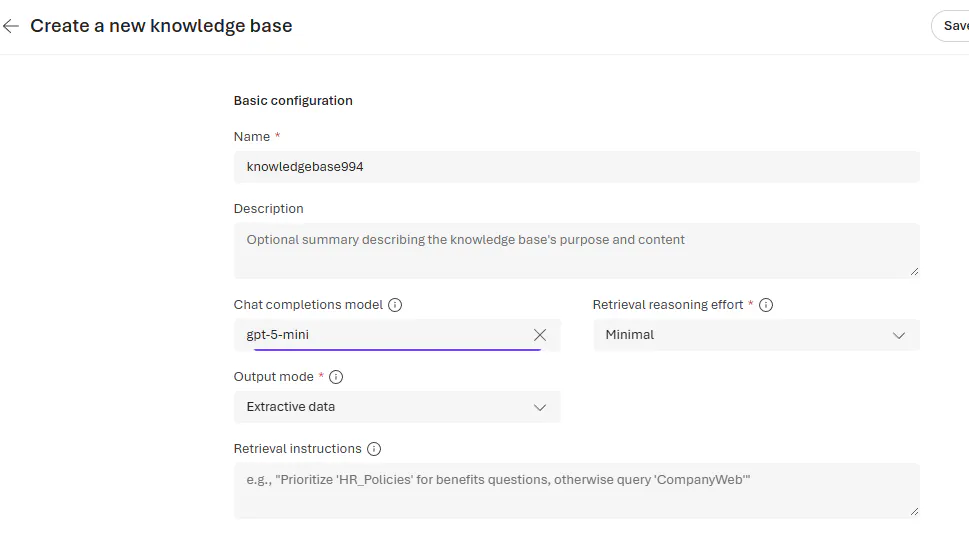
Click Add sources to connect your Azure Blob Storage that you will upload documentation to
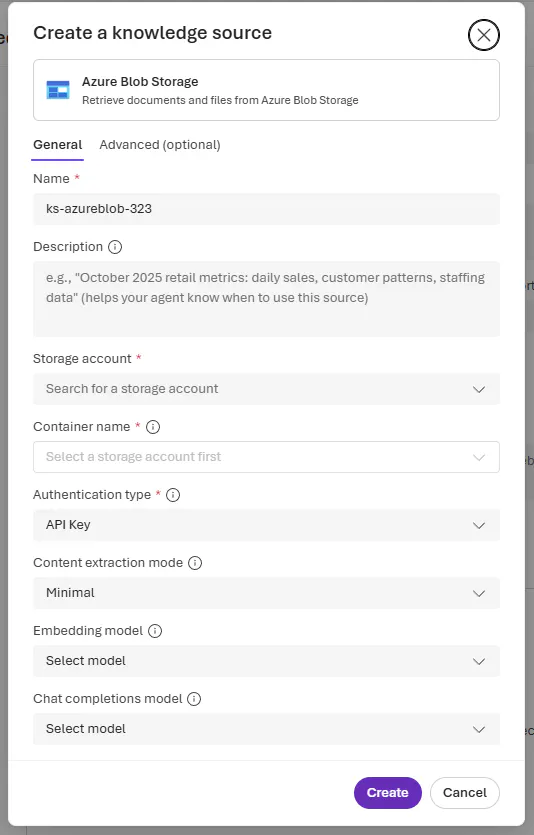
Select the Storage Account and Container name that will hold your uploaded documentation. Everything else on the General tab can be left as defaults. Your Name may be different.
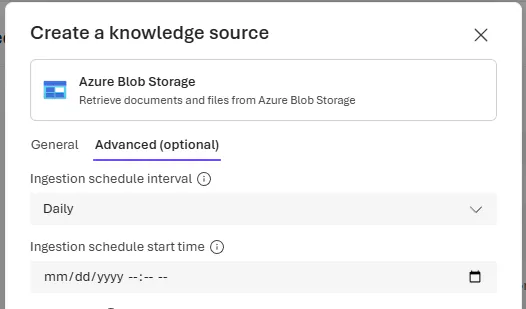
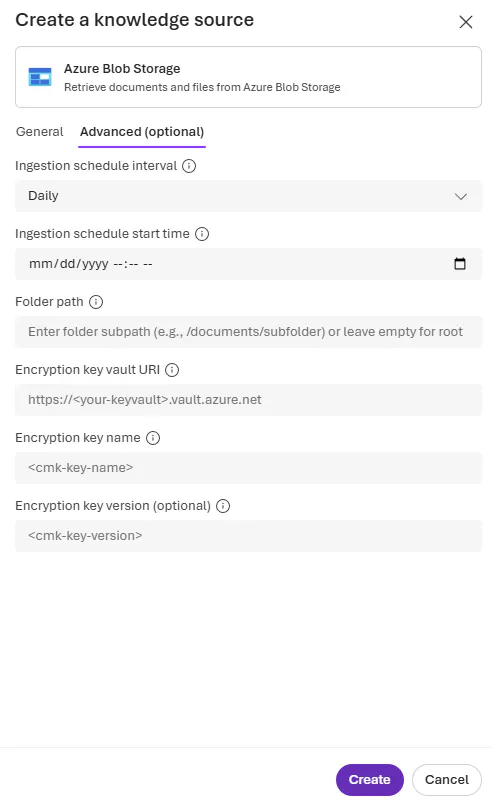
Define retraining on the Advanced (optional) tab. By default documents are processed daily, but this can be tuned down further.
Click on Create within the Create a knowledge source popup
Wait for the operation to complete

Click on Save knowledge base
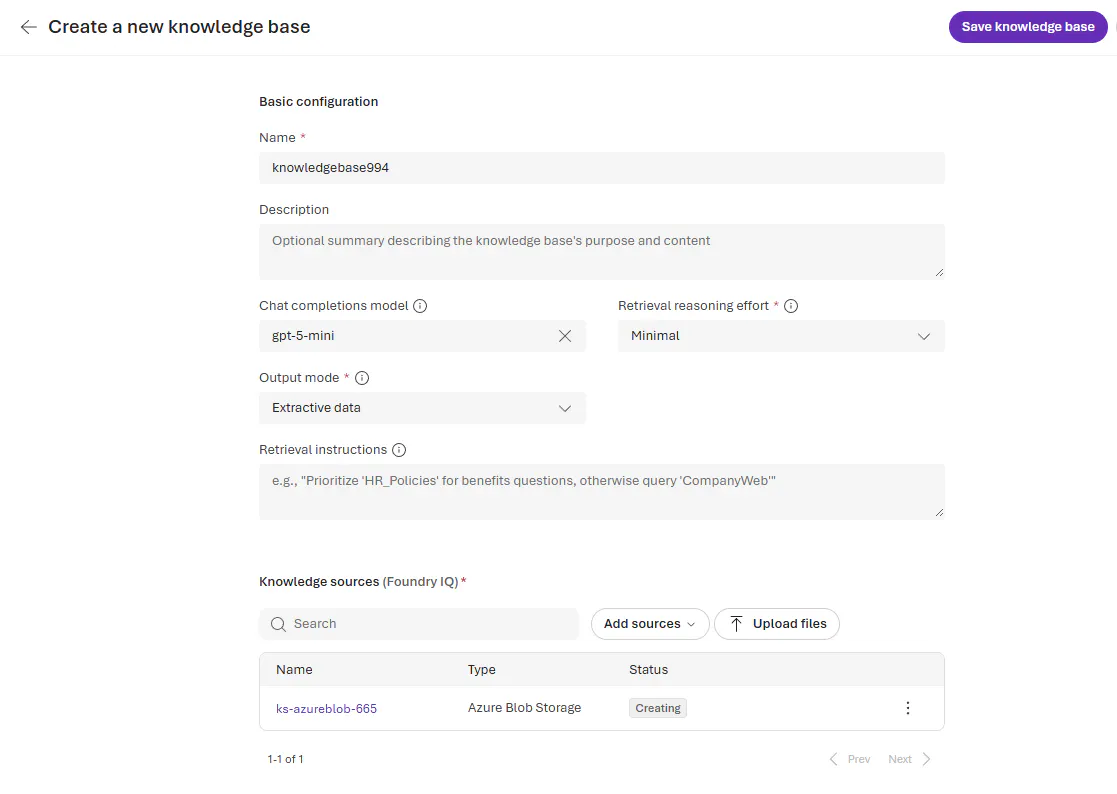
Wait for the operation to complete

Retrieve the Index Name
With our work done in Foundry portal, we'll go back to the tab we have open for the Azure Portal. When we last left it, we were on our Foundry Project resource.
Click the X in the top right hand corner highlighted in purple in the following image.
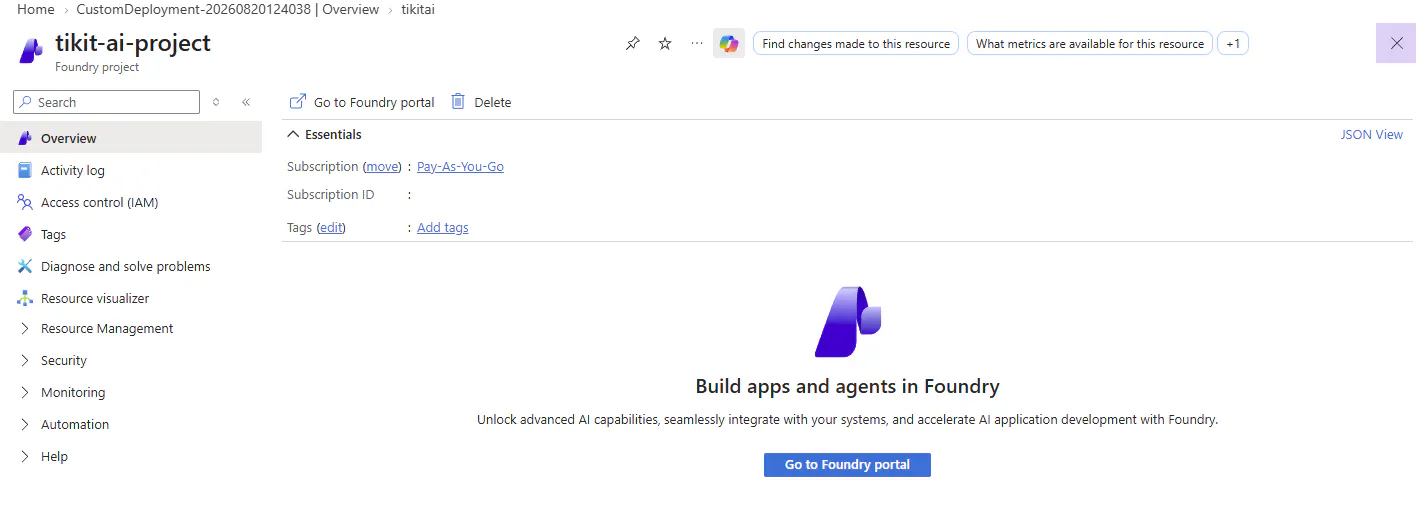
This will place you back in the resource group you created as part of the deployment with the 4 resources.
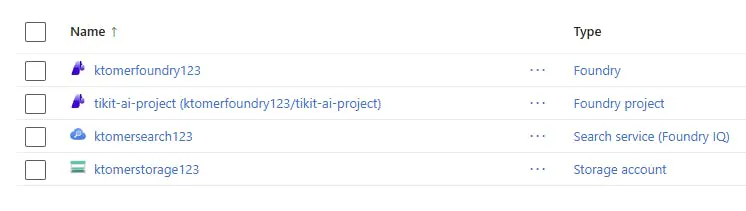
Click the Name of your Search service
Navigate to Search management -> Indexes
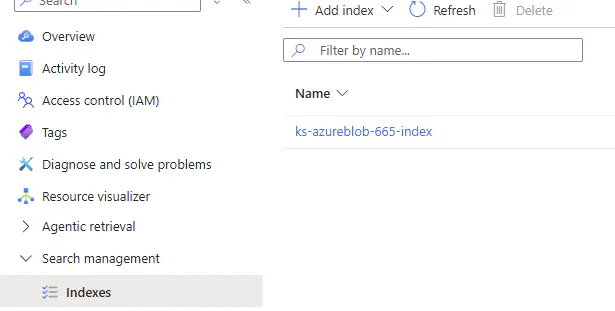
This is your Index Name that you will enter into the Tikit AI settings page. Your name will be different than the above image. Keep this Azure Portal tab open as we'll need it in the next section

Upload Documents into Blob Storage
With your Index created and Tikit connected to Foundry. We need to upload documentation so Tikit Virtual Agent can respond when no relevant Catalog Item can be found in your Tikit environment. Similar to the Search service:
Click X in the top right hand corner highlighted here in purple

Navigate to your Storage Account
Then navigate into Data storage -> containers
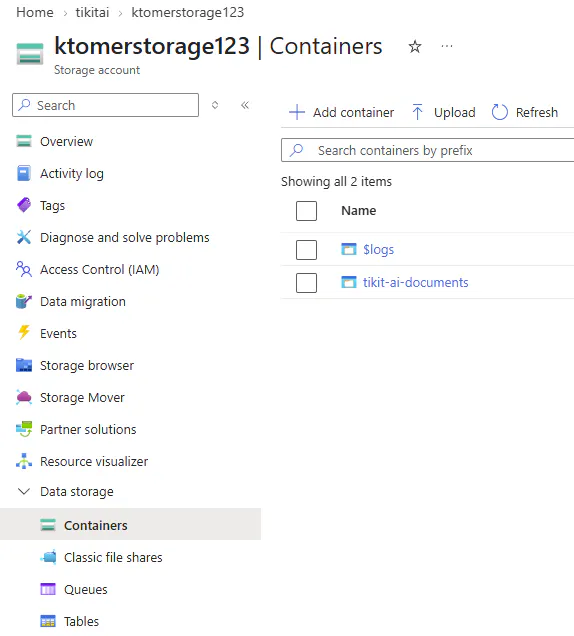
Click into tikit-ai-documents
It's here that any documentation uploaded will be (re)trained against for your Tikit AI integration.
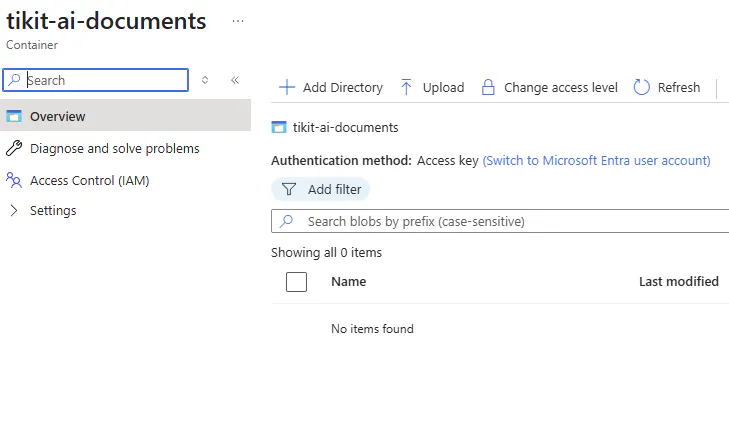
If you're looking to streamline uploads without use of the Azure Portal, you can use Power Automate to push files from OneDrive or Sharepoint directly into this container. Check out our related KB Article!
Integrate OpenAI
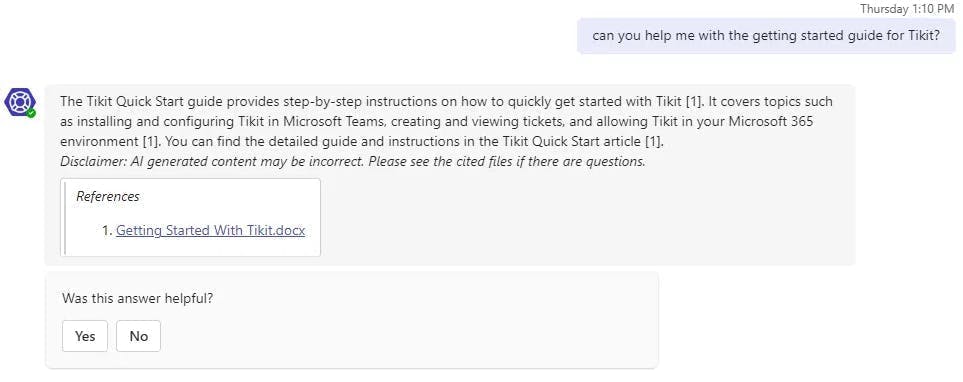
Open AI on Azure is now processing your data and preparing to respond with generative answers. You can test this out within Chat Playground. Ask a question about some of the documentation you uploaded. The following image is an example wherein documentation about Tikit’s Quick Start guide was uploaded.
Estimating Token Cost
We can also use this example to approximate the cost given the above configuration where 1 Token is approximately 4 characters. Please note that costs will vary and the following is only an approximation. The most up to date pricing information is available on Microsoft's pricing page as seen here.
– $0.00000075 per input token ($0.00000075 x 57 = $0.00004275)
– $0.0000045 per output token ($0.0000045 x 348 = $0.001566)
Change the System Prompt (optional)
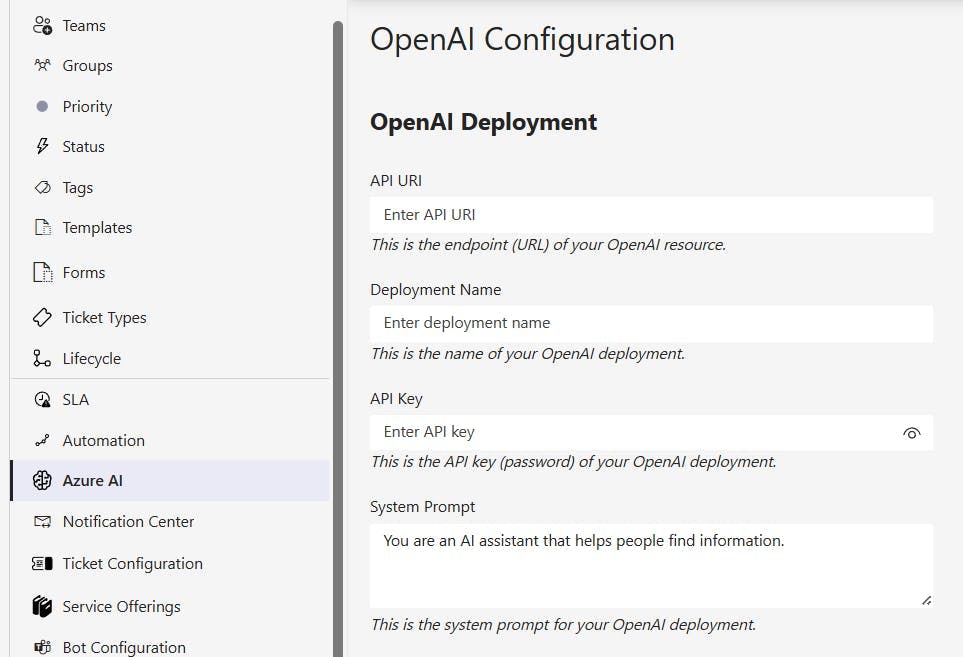
Once the integration with OpenAI on Azure has been setup. You can optionally alter the System Prompt. You can think of the System Prompt as the instructions that are always provided to your OpenAI instance. By default the System Prompt is:
You are an AI assistant that helps people find information.
But this message could be altered or added to. For example, let's say you wanted to slightly modify the tone and/or personality of generative AI responses:
Answers you provide should be truthful but said in a light hearted tone
Alternatively, you could provide very direct instructions:
If you are asked who you are, respond by saying "I'm Tikit Virtual Agent of course!" If you are asked how you know what you know, respond that your knowledge is based entirely upon what has been uploaded.
The System Prompt will count towards the total number of tokens used per interaction. Keep this in mind as you construct your own System Prompts.